Painting a staircase properly: preparation, BIN primer and a cleaner finish
A staircase like this can change the feel of a house more than people expect.
It is not the largest area in the home, but it is one of the most visible. It is used every day, catches the light from different angles, and if the finish is not right, it shows quickly. That is why staircase painting is rarely just about colour. It comes down to preparation, product choice and getting the balance right between durability and appearance.
This particular project was carried out in County Kildare, just before the clients were due to move in. The staircase was one of the last parts of the house they needed completed, so the work had to be clean, controlled and properly thought through from the start.
Why stair painting needs a different approach
Stairs are high-wear surfaces. They are touched constantly, walked on every day and seen from close range.
That changes the standard required. On walls, a small inconsistency may go unnoticed. On stairs, handrails and treads, it usually does not. Edges, preparation and the final sheen matter more here than they do in many other parts of the house.
That is one of the reasons staircase work often sits somewhere between painting and finishing joinery. It has to look right, but it also has to hold up. The same principle runs through much of our interior painting work in Dublin and surrounding areas, especially in occupied homes or properties being prepared for handover.
The starting point on this staircase
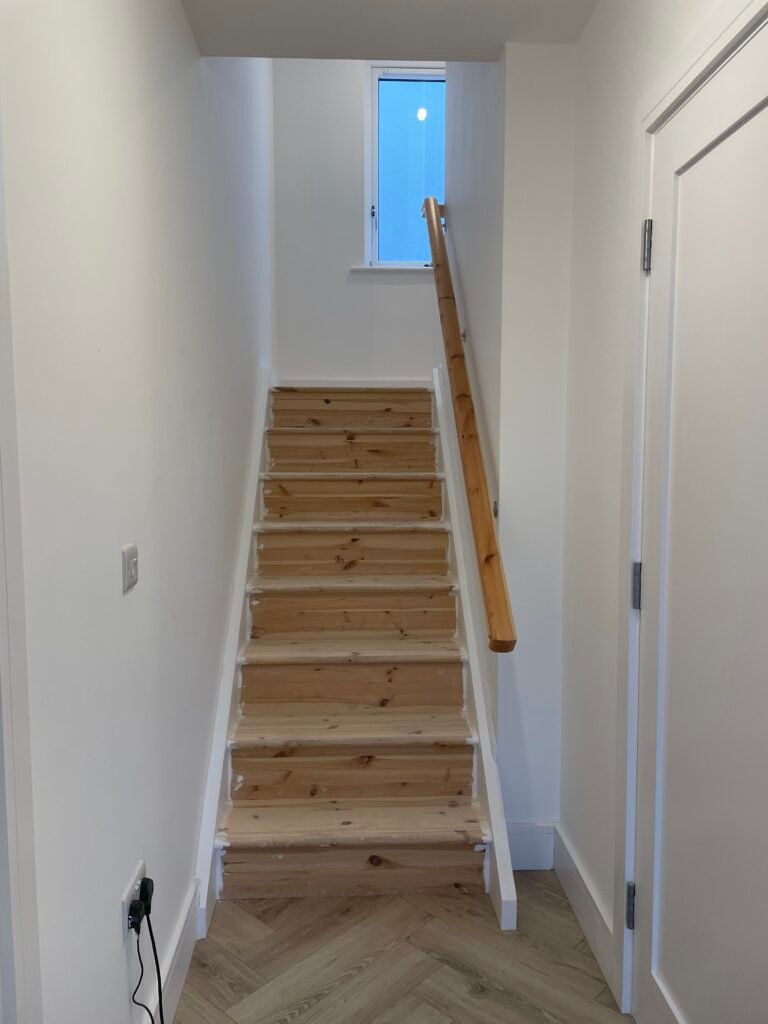
Before the new finish went on, the staircase had already been painted in a darker tone and showed visible wear from use. The structure itself was sound, but the overall look felt tired and uneven.
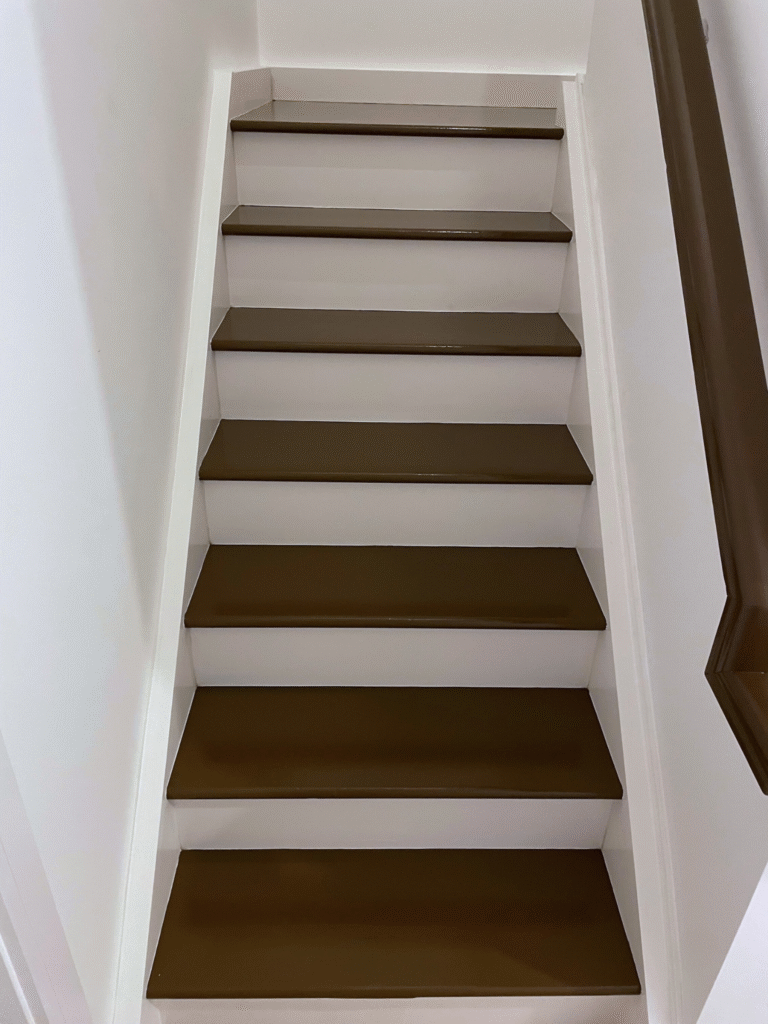
The clients wanted something cleaner and more settled before moving in. The direction was simple, but effective: keep the risers and surrounding elements light, bring the treads into a warm brown tone, and carry that same colour through the handrail so the whole staircase felt more resolved.
It is the kind of contrast that works particularly well in narrower stairwells. The lighter areas help the space stay open, while the deeper tone on the treads and rail gives it structure.
Preparation before any paint went on
As with most work of this kind, the final result depended heavily on what happened before the topcoats.
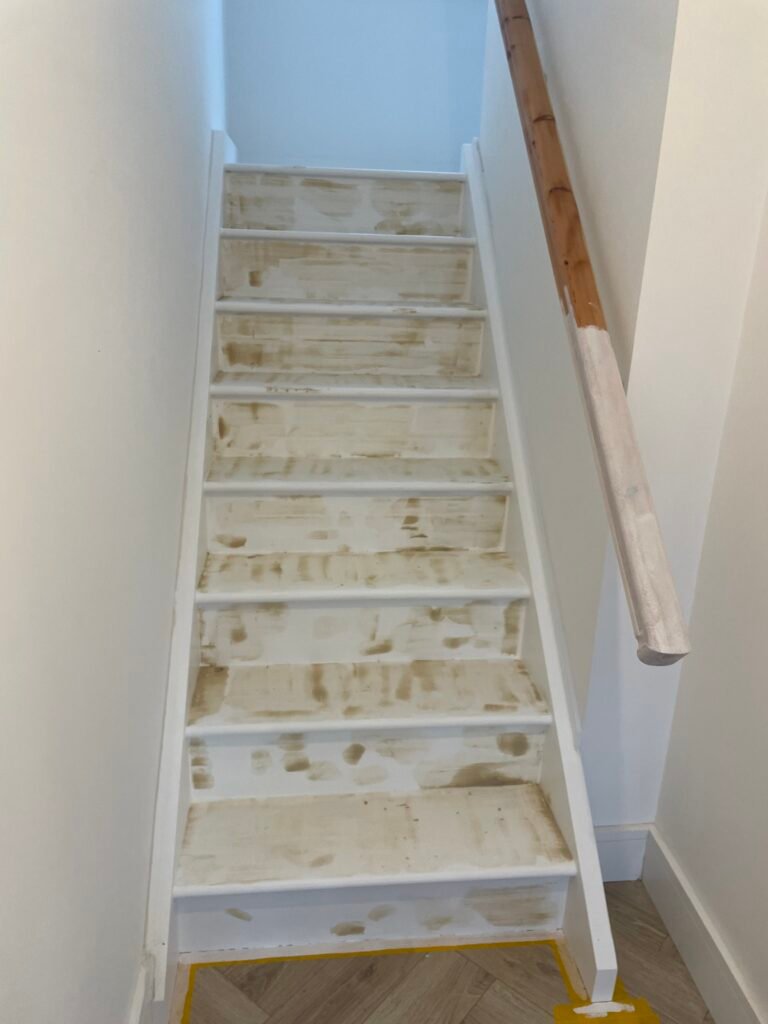
The staircase was first cleaned and degreased, then sanded back using dust-controlled sanding equipment. That part mattered. Sanding stairs by hand, or without extraction, can leave a surprising amount of fine dust in the air and across the rest of the property. Using on-tool extraction removes dust directly from the working surface instead of allowing it to circulate through the house. The result is a cleaner, better-controlled working environment, especially in homes that are close to completion.
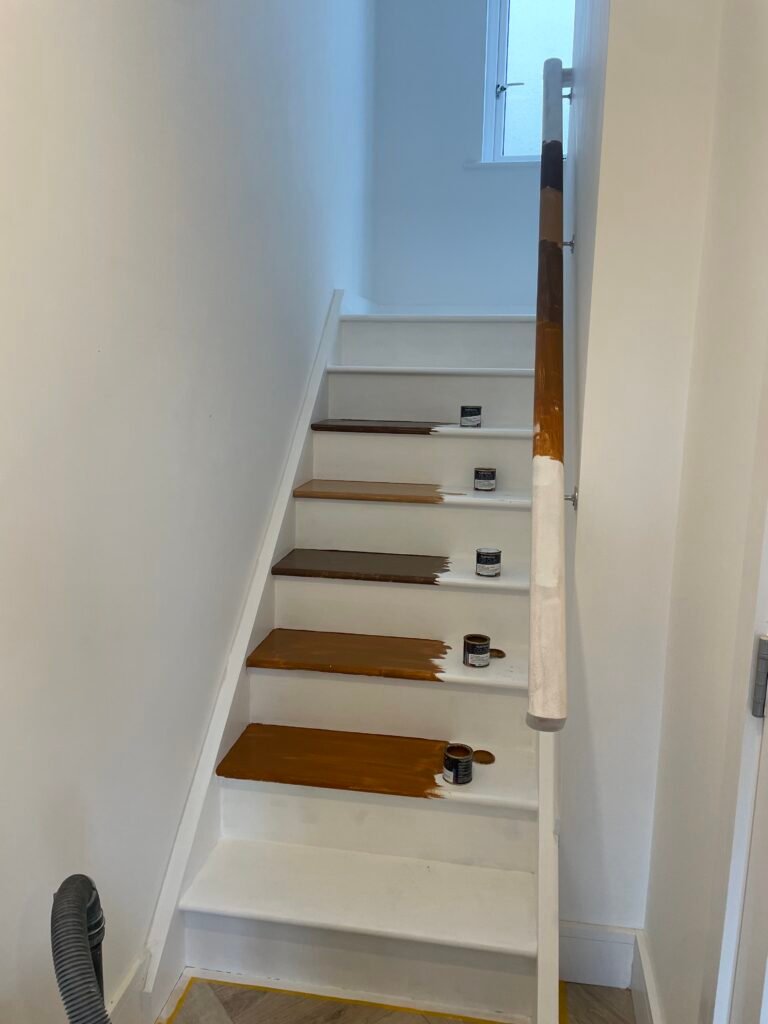
Once the surfaces were prepared, the staircase received one coat of Zinsser B-I-N primer. B-I-N is a shellac-based primer known for fast drying and strong adhesion on difficult or previously coated surfaces, which made it a good fit here. On this kind of project, the primer is not just a technical step. It is what helps create a stable base for the finish coats that follow.
After priming, the staircase received three coats over the BIN, allowing the colour and finish to build properly and evenly across the surface.
If you want to understand that side of the process in more detail, it ties closely into how we approach preparation and finishing on our projects.
Why BIN primer was part of the system
A lot of staircase repainting problems begin with adhesion.
If the old coating still has sheen left in it, or if the surface has been handled, cleaned poorly or painted several times over the years, the topcoat is only as good as what it is bonding to. That is where the primer earns its place.
Zinsser describes B-I-N as a fast-drying shellac-based primer with strong adhesion, including over glossy surfaces, along with good sealing properties for more difficult substrates.
Used properly, it helps make the whole system more dependable.
Choosing the right balance of colour
One of the stronger parts of this project is the colour balance.
The treads and handrail were finished in a warm brown, coffee-toned shade, while the surrounding stair elements were kept light. That combination gives the staircase more structure without making the space feel heavy.
A lot of homeowners focus on wall colour first, but stairs often need to be read as a separate visual element. If everything is too light, the staircase can lose definition. If everything is too dark, the space can start to feel closed in. A balanced contrast usually works better, especially in modern houses where the stairwell needs to feel clean and ordered rather than overdone.
The same logic often applies when choosing the right paint finish for different rooms. The finish has to suit the way the space is used, not just the colour chart.
Link: Best Wood Paints
Once the work was completed, the difference was not dramatic in the loud sense. It was better than that.
The staircase looked cleaner, more deliberate and more in keeping with the rest of the house. The handrail and treads now had a stronger visual connection, the lighter risers kept the space open, and the whole area felt more settled.
That is often what good staircase work does. It does not shout. It simply makes the house feel better put together.
In this case, because the clients were about to move in, that mattered even more. The staircase was one of the final things they would see before taking over the property, so it needed to feel properly finished, not just improved.
A few practical points worth knowing
There are a few things homeowners often overlook with stairs:
• preparation matters more than colour
• dust control makes a real difference, especially in homes close to completion
• primer choice matters more than many people realise
• contrast should be judged carefully, not chosen in isolation
• stairs rarely respond well to rushed work
A staircase is one of those parts of the house that quietly sets the tone for everything around it.
When it is handled properly, the result feels calm, clean and finished. When it is rushed, it shows.
This project in Kildare was a good example of how much difference the right preparation, a strong primer system and a well-judged colour contrast can make. One coat of BIN, three coats over the top, dust-controlled sanding and a straightforward palette were enough to turn a tired staircase into something much more resolved.
If you are planning similar work and want it approached properly from the beginning, feel free to get in touch. We are always happy to look at the surfaces involved and advise on the best way to approach the job.