
The Best Paint Finish for Your Home
Choosing a colour usually gets most of the attention.
The finish matters just as much.
Matt, eggshell, satin and gloss all behave differently once they are on the wall or woodwork. They change how light moves through the room, how easily the surface can be cleaned and how much of the surface underneath you are going to see.
There is no single finish we would use throughout every house.
What follows is the general guide we normally work from.
Once we see the property, the surfaces and how each room is going to be used, we can be much more specific.
First, what is a paint finish?
The finish is simply the level of sheen the paint has once it dries.
At one end you have very flat matt paints that reflect very little light.
At the other you have gloss, which reflects a lot of it.
In simple terms:
- Matt — very little shine
- Soft Sheen / Eggshell — a little more reflection
- Satin — noticeably smoother and brighter
- Gloss — high shine
One thing worth knowing is that these names are not completely standard between manufacturers. An eggshell from one brand can have considerably more sheen than an eggshell from another. That is why we look at the actual product rather than choosing purely from the name on the tin.
Ceilings
For most ceilings, we keep things matt.
A flat finish reflects less light and generally gives the ceiling a cleaner, calmer appearance. It also tends to be more forgiving on older plaster, previous repairs and small surface imperfections.
Put too much sheen on an imperfect ceiling and light will find every little ripple.
For most residential projects, a good quality flat or matt ceiling paint is still our preferred choice.
Our general choice: Matt / Flat Matt
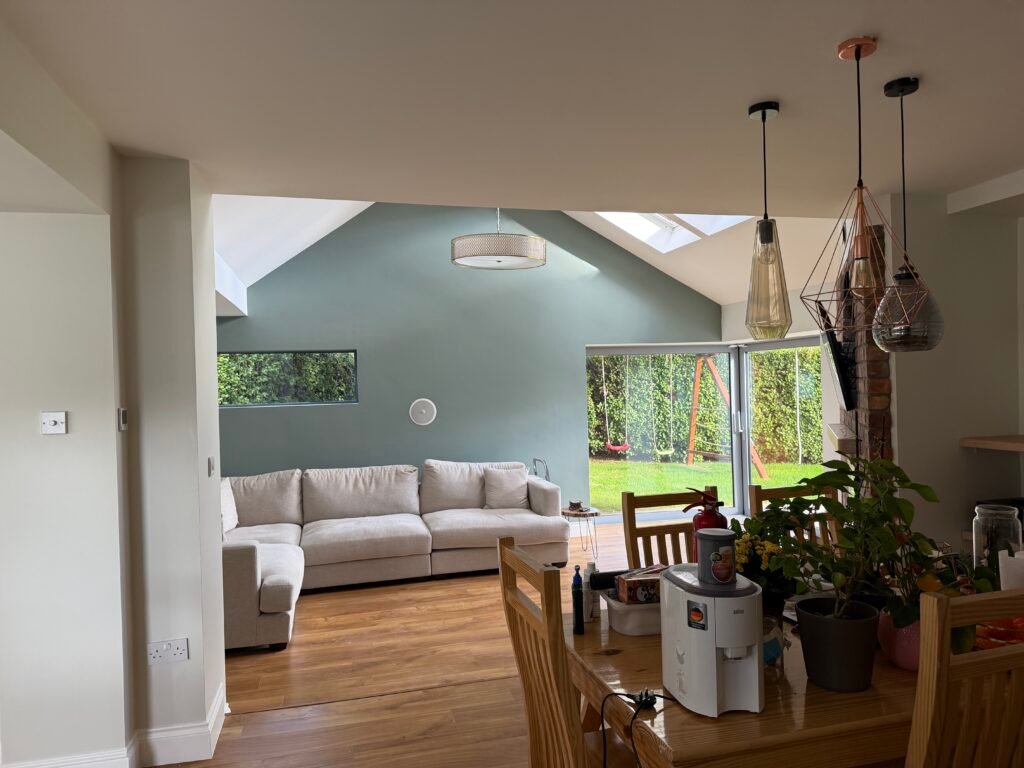
Living rooms and bedrooms
It gives colour a soft finish and does not draw unnecessary attention to the wall surface.
Modern matt paints have moved on considerably as well.
A durable matt such as Colourtrend Ceramic Matt, Dulux Diamond Matt or similar professional products can give you the low-sheen appearance people want while still allowing the wall to be cleaned much more easily than older traditional matt paints. Colourtrend describes Ceramic Matt as washable and stain-resistant, while Dulux positions Diamond Matt specifically as a durable, repeatedly cleanable finish. (Colourtrend)
So you no longer need to put shiny paint on a wall simply because you want it to be practical.
Our general choice: Matt or Durable Matt
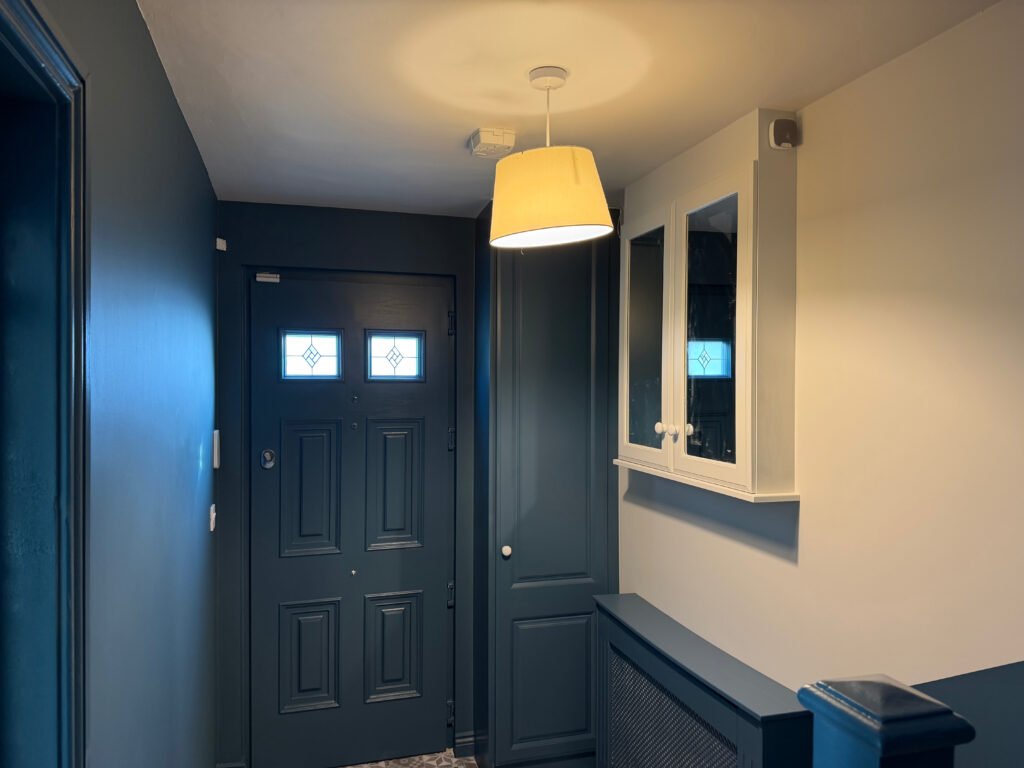
Hallways, stairs and busy family areas
This is where we normally move towards the more durable products.
Hallways get touched.
The walls around light switches get marked.
Bags catch corners. Children run their hands along the walls. Staircases simply take more abuse than a quiet bedroom.
Our preference is usually still to keep the appearance fairly matt, but use a coating designed to withstand cleaning and everyday wear.
Dulux Diamond Matt, for example, is designed around scrub, scuff and stain resistance, while Colourtrend Ceramic Matt is intended for busy spaces where a matt appearance is still wanted. (duluxtradepaintexpert.ie)
Our general choice: Durable / Washable Matt
Kitchens
Kitchens used to mean shinier walls almost automatically. That is not really necessary anymore. What matters is that the coating can deal with cleaning, marks and the way the room is used.
A good washable matt can work very well in many kitchens. Soft sheen or eggshell can also make sense where more moisture or frequent cleaning is involved.
The decision depends on the room rather than simply the word kitchen.
Our general choice: Durable Matt, Soft Sheen or Eggshell
Bathrooms
Bathrooms need a little more thought.
Steam, condensation and ventilation all matter.
For a well-ventilated bathroom, there are modern low-sheen products that perform very well. Where condensation is heavier, we normally look at coatings specifically designed for moisture.
Dulux, for example, recommends Diamond Eggshell for kitchens, bathrooms and higher-humidity spaces, while Colourtrend positions Soft Sheen as a durable washable finish suited to kitchens and bathrooms. (duluxtradepaintexpert.ie)
The important thing here is not simply making the wall shinier. It is choosing a coating designed for the environment.
Our general choice: Moisture-resistant Matt, Soft Sheen or Eggshell
Doors, skirting and woodwork
This is where people normally notice the biggest difference between finishes.
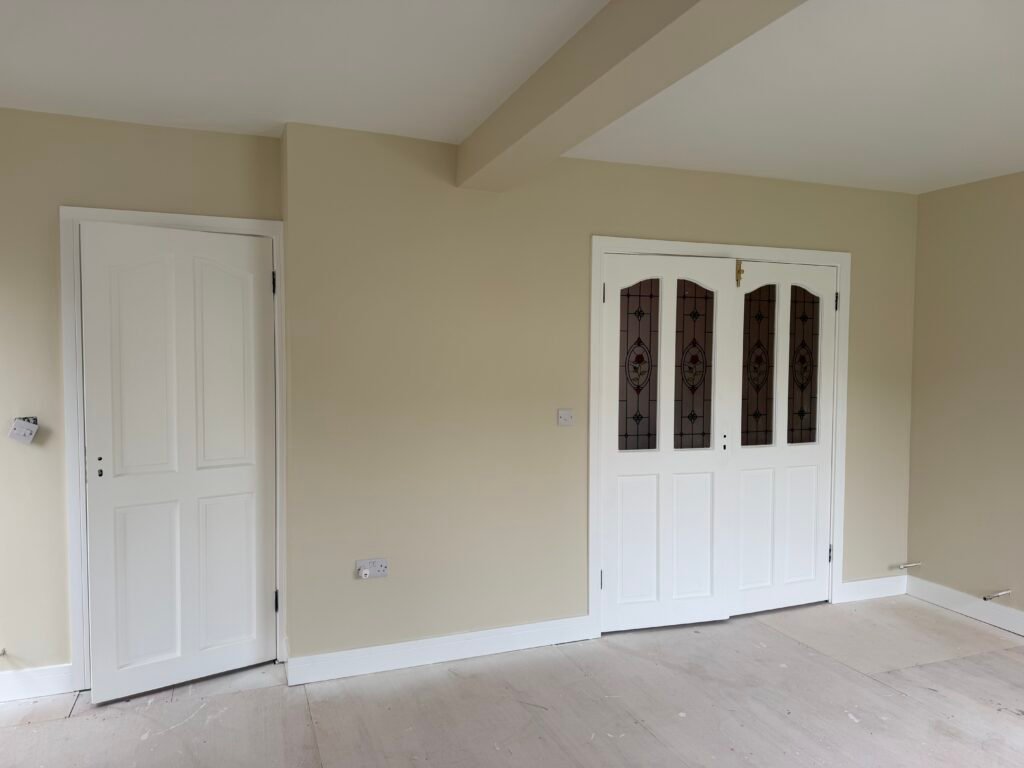
For residential woodwork, we generally work with eggshell or satin.
Eggshell is softer and more understated.
Satin has a little more sheen and is a very good practical finish for doors, skirting boards and architraves.
Gloss is much stronger visually. It can look excellent in the right property, particularly on traditional joinery or when the designer deliberately wants the woodwork to stand out.
It is also less forgiving.
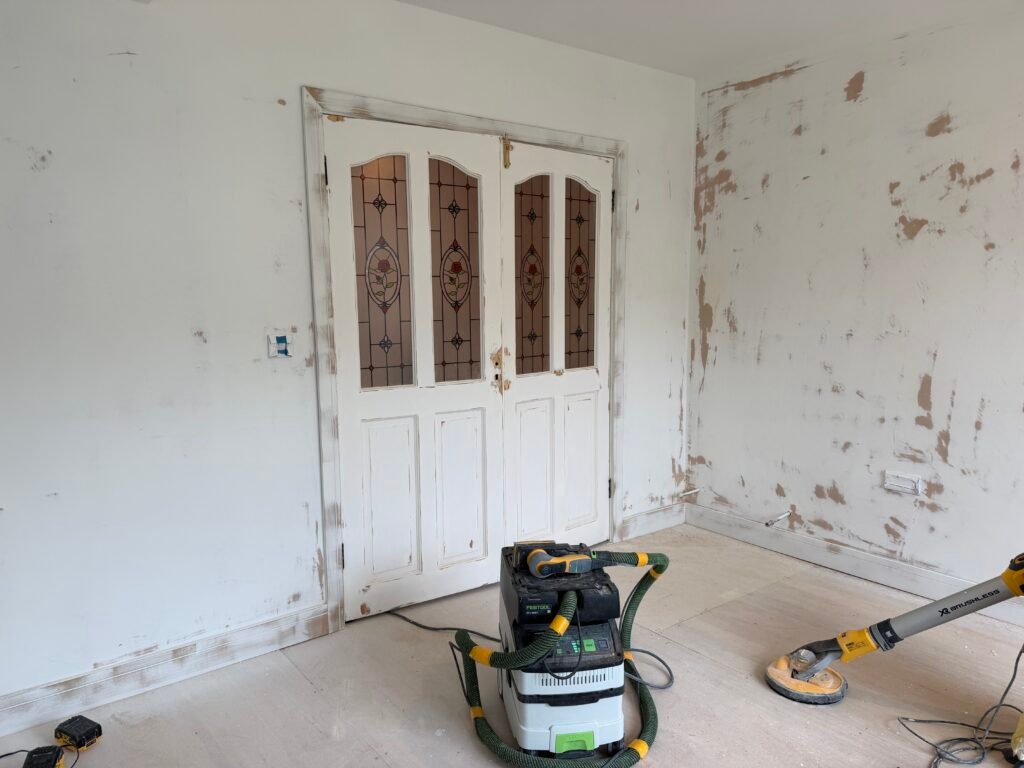
The more light a finish reflects, the more carefully the surface underneath needs to be prepared.
On most modern residential projects, we tend to favour a good water-based eggshell or satin. Products such as Dulux Diamond Satinwood and similar modern systems are designed to be tough, non-yellowing and suitable for areas that take regular wear. (duluxtradepaintexpert.ie)
Our general choice: Eggshell or Satin
A simple guide
Area | What we generally recommend |
Ceilings | Matt / Flat Matt |
Living rooms | Matt |
Bedrooms | Matt |
Hallways & stairs | Durable Washable Matt |
Kitchens | Durable Matt / Soft Sheen |
Bathrooms | Moisture-resistant finish / Soft Sheen / Eggshell |
Doors & skirting | Eggshell / Satin |
Kitchen cabinets | Specialist Eggshell / Satin |
These are guidelines.
They are not specifications.
That distinction matters.
Our general choice: Eggshell or Satin
When we price and plan a full interior painting project, we normally look at the property first and build the finish schedule around the house.
We look at the existing surfaces, the light, the colours being used, how busy each room is and what sort of finish the homeowner actually wants.
From there we put together the scope of work and colour schedule, including the products and finishes for walls, ceilings and woodwork.
Two houses can use exactly the same colour and still need a different paint system.
That is why we do not like specifying an entire project from a paint chart alone.
One last thing about sheen
The higher the sheen, the more the surface underneath starts to matter.
Matt is generally forgiving.
Satin less so.
Gloss will show you almost everything.
A beautifully prepared door in gloss can look exceptional.
Put the same finish over poor preparation and it can make every sanding mark and imperfection more obvious.
So when we recommend a finish, we are also thinking about what the surface can realistically carry.
That judgement is part of the job.