
Painting an exterior wall and metal gate – what actually makes it last
Painting an exterior wall or a metal gate isn’t just about freshening things up.
It’s about using the right system for each surface, so the finish holds up in real conditions.
On this job, the area included:
• a rendered exterior wall
• steel fire exit doors and metal gates
• timber trim along the roof edge
Three different surfaces. Three different approaches.
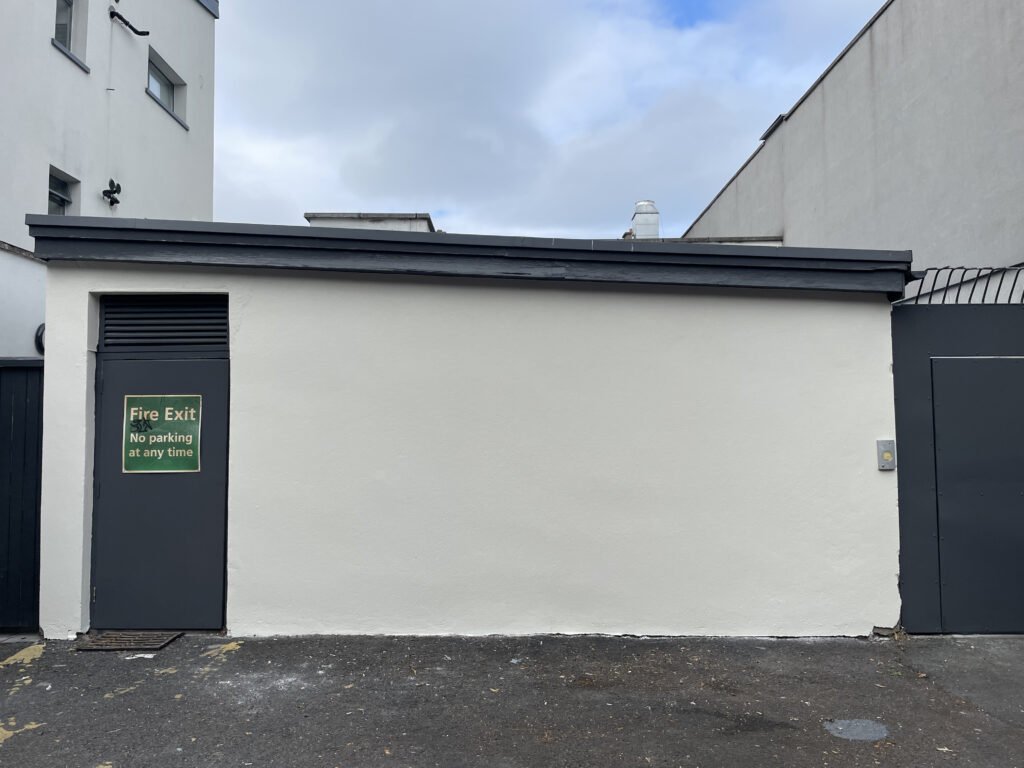
Exterior wall: keeping moisture out, not trapping it in
For this, Dulux Weather Shield with Sealant Technology was used. It’s designed for weather and works well on masonry when the surface is properly prepared.
Before painting:
– the wall was cleaned
– loose or chalky areas were stabilised
– repairs were allowed to fully dry
Once the surface is sound, Weather Shield gives a consistent finish that stays clean and protects the wall long term.
Metal gates and steel doors: preparation is the job
Metal is where most repaints fail.
Paint doesn’t fail on metal because of the brand.
It fails because the surface wasn’t prepared properly.
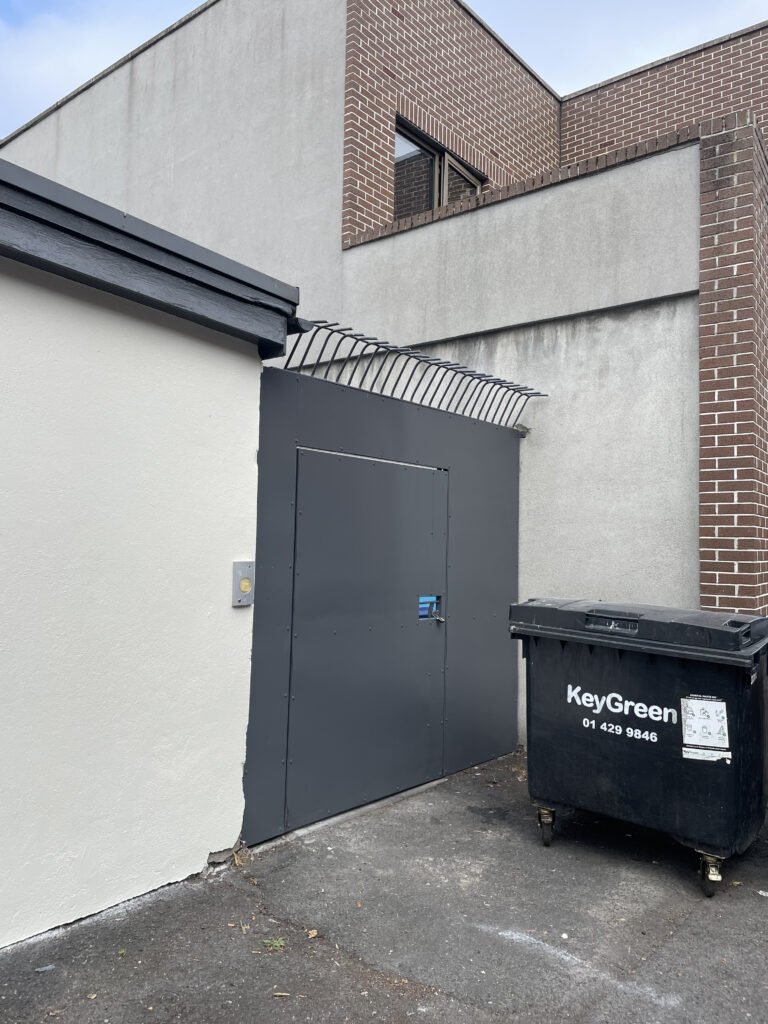
For metal gates and steel doors, the correct system matters:
• degreasing to remove contamination
• sanding to create a proper key
• priming to prevent corrosion
• finishing with a durable metal paint
A standard metal system includes:
• Dulux Metalshield Primer (for adhesion and rust protection)
• Dulux Metalshield Topcoat (for durability and colour retention)
Each step builds on the previous one.
Skip one, and the finish won’t last.
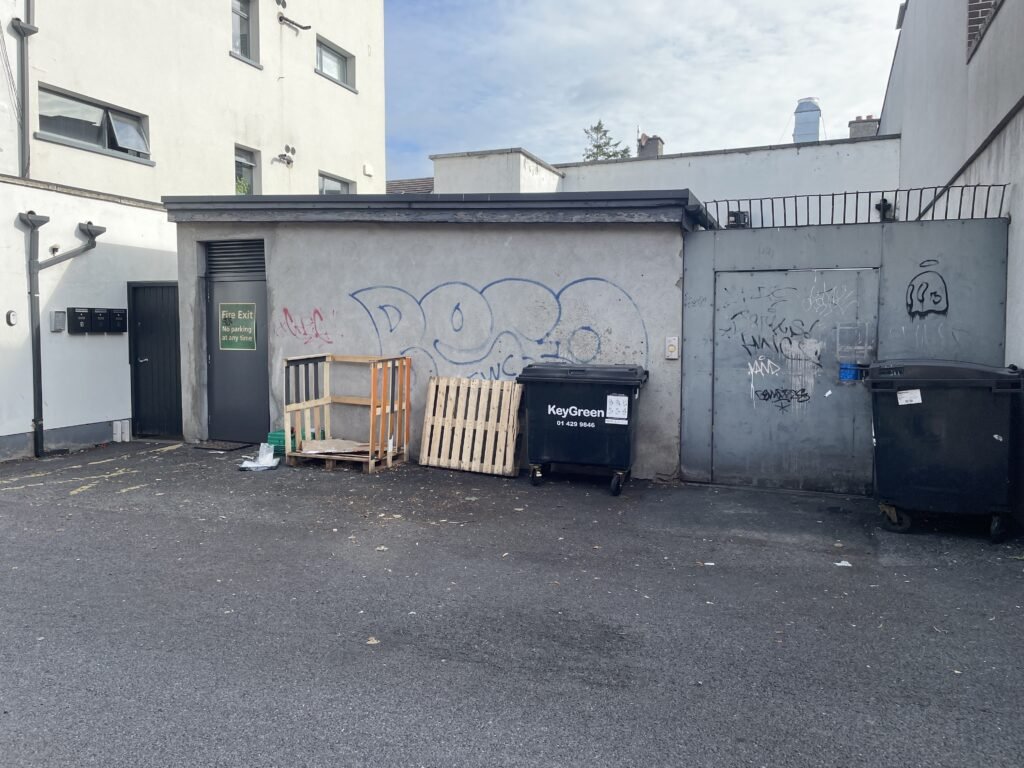
Timber trim: protecting edges and detail
Timber edges are often the first areas to fail.
On this job, the timber trim was:
• sanded back
• sealed and primed where needed
• finished with an exterior-grade system designed to flex with the wood
This keeps moisture out and prevents early peeling along the edges.
Common mistakes with exterior walls and metal gates
These are the issues that usually lead to early failure:
• painting metal without sanding or degreasing
• skipping primer on steel
• using masonry paint on metal or timber
• painting over damp surfaces
• rushing drying times between coats
Good results come from patience and the right sequence, not shortcuts. The aim wasn’t to make the space look “perfect”.
It was to make it clean, consistent, and built to last.
When the correct systems are used:
• the wall stays protected
• the metal holds its finish
• the timber remains sealed and tidy
That’s what proper exterior painting should do.
FAQ – Painting Explained
These are the questions that usually come up after reading this.
1. Why do some exterior painting jobs fail after only a year or two?
In most cases, it’s not the paint. It’s preparation.
Metal and exterior surfaces need to be cleaned, stabilised and primed properly before any finish goes on. When steps are skipped to save time, failure shows up quickly.
2. Is it normal for painters to use different systems on the same job?
Yes, and it should be expected.
Render, metal and timber behave differently outdoors. Using the same paint or process on all of them usually leads to poor results on at least one surface.
3. Why don’t painters always explain the full preparation process?
Because preparation takes time and isn’t always visible once the job is finished.
But it’s also the part that most affects how long the paint will last. A clear explanation usually means the job is being planned properly, not rushed.
4. Does using a well-known paint brand guarantee a long-lasting finish?
No.
A good brand helps, but the system matters more than the label. Correct surface prep, priming and drying times are what make exterior paint hold up over time.